'Dartmoor: A Radical Landscape' is an exhibition at the Royal Albert Memorial Museum (RAMM), Exeter, and shows the works of twenty different artists all using Dartmoor as inspiration for their practices. Ella Bradbury delves into the work of particular artists in the exhibition with close links and friendships to one another, exploring the many communities formed over the landscape.
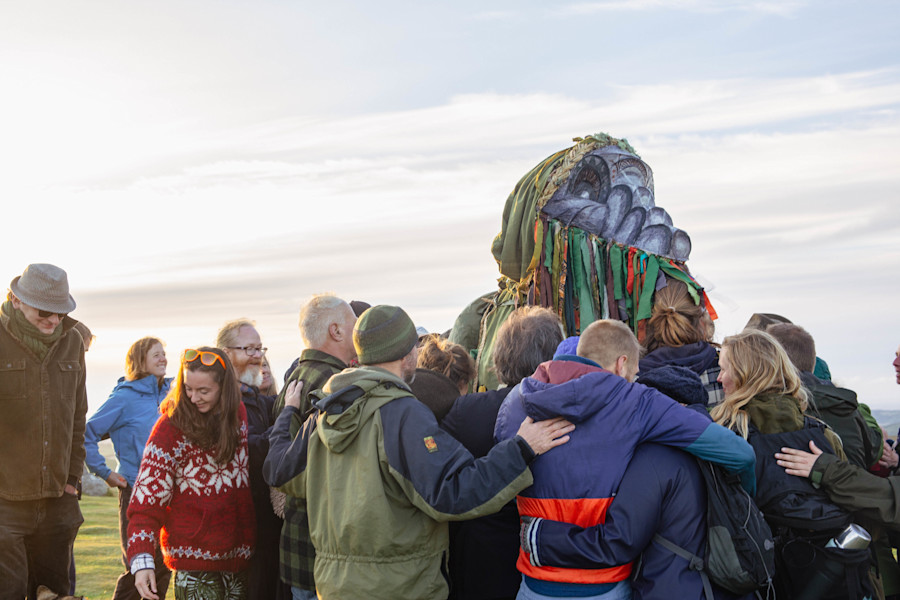
It isn’t often you come across an exhibition which includes the work of artists, activists, academics and researchers all in one, however, when your subject matter is a landscape as diverse and vast as Dartmoor, much is possible. Dartmoor: A Radical Landscape runs at the Royal Albert Memorial Museum (RAMM) until the 23rd of February and showcases the practices of twenty artists exploring Dartmoor through its distinct landscape, whilst also recognizing and exploring the climate, ecological, and legal crisis’ currently impacting the moors. The variety of mediums, which include photography, video, and land art, as well as specially commissioned works from Alex Hartley and Ashish Ghadiali, illustrate a strong sense of community and inspiration developing from the unique landscape.
With its striking and dramatic features, from temperate rainforest to craggy rocks, it is unsurprising that so many artists have turned to photography to capture the essence of Dartmoor. Two photographers in particular, James Ravilious and Chris Chapman both exhibit individual images in Dartmoor: A Radical Landscape, yet Chapman’s image, A Man of The Cloth!, 1997, which features Ravilious photographing in Wistman’s wood, is one of the clearest examples of friendship between artists in the exhibition. Both an interesting look into Ravilious at work, his head shrouded by a cloth whilst using a high format camera, and an affectionate ode to the friendship between the two photographers, the image encapsulates a friendship sharing artistic techniques and inspirations. Chapman and Ravilious began walking and sharing techniques as they navigated the landscape as artists in the 1970s and intimate images such as this becoming a part of their work in the process.
Seeing a community of people entirely reliant on the radical landscape of Dartmoor is a clear indication of community spirit, especially when we come to learn that one of the artists in the exhibition themselves, Fern Leigh Albert, lived off-grid in the Steward Community Woodland. Leigh Albert, who is also a photographer, speaks fondly of Spero’s visits to the community to photograph, often after the group had hosted parties and community gatherings, and through Leigh Albert’s own photography, a new branch of the Dartmoor community appears. As previously mentioned, Dartmoor: A Radical Landscape is concerned with recognising current issues in the landscape. Prominent issues of climate change and ecological crisis are tackled in Ghadiali and Hartley’s commissions for the exhibition, and the issues of land ownership and trespassing that have plagued Dartmoor in recent years are documented in Leigh Albert’s campaign photography.
Dartmoor remains one of the only places in the UK it is legal to freely wild camp, a term that was first threatened in 2022 when a landowner’s ownership claims tried to impact these freedoms. The Stars are for Everyone collective are an organisation which Leigh Albert is involved in, who host camp outs, protests, and have even appeared in court and legal proceedings in an attempt to fight freedom restrictions.
Collaborative projects are not exclusive to just White and Fabian Miller however; you may notice that among the lists of artists in this exhibition, the names Laura Hopes and Katherine Earnshaw appear alongside one another. Produced in 2024, the collaborative project between the pair Not a (field)guide to the Future, 2024 is a collage book described as ‘a memoir of our friendship, but also a kind of biography of a landscape’. Both Earnshaw and Hopes are academics as well as artists, and the memoir that is shown in the exhibition is a testament to the friendship they have forged whilst exploring human interactions with landscape in a collaborative project started in 2017. This work is worthy of note due to the pattern of artistic practice, friendship and human interaction crossing over on Dartmoor. Summarising the themes emerging from Dartmoor: A Radical Landscape begins with understanding the varied landscapes and the issues at the forefront of Dartmoor, but also includes a strong sense of collaboration, community, and friendship running through both the artwork and the landscape.
I refer back to my original statement, it isn’t often that an exhibition combines the work of so many artists, researchers, academics and communities, but by placing these works together in an exhibition, a true picture of the Dartmoor community emerges. With so many artists finding inspiration in the landscape, community and collaboration seems almost innate to the artistic scene of Dartmoor, both for enjoyment and documentation of the landscape, as well as exploring its most timely issues. I finish with a quote from Fabian Miller which sums up the attraction to Dartmoor and its landscape: “I totally understand why Dartmoor is a place which gathers people to it. People want to spend time here because it creates the opportunity for them to discover things about themselves.”.
Dartmoor: A Radical Landscape is on show at RAMM until the 23rd February.
Acknowledgements
Exhibition Guide: https://rammuseum.org.uk/whats-on/dartmoor-a-radical-landscape/
Dartmoor: A Radical Landscape. October 19, 2024. Exeter. Royal Albert Memorial Museum.
Tanoa Sasraku. “Bio | Tanoa Sasraku,” 2021. https://www.tanoasasraku.com/bio.
Robert Darch and Fern Leigh Albert, Talk with Exeter College Photography Students, RAMM, Exeter, February 5, 2025.
University of Exeter
Room 153, Queen's Building
The Queen's Drive
Exeter EX4 4QH