This online exhibition from the University of Exeter's Academy of Nursing showcases original works by undergraduate nursing students, from paintings to poetry and sculpture to song. It forms part of the 2024-25 'The Art and History of Nursing' module, which is designed to deepen students' understanding of nursing history and the lived experiences of health, illness and caregiving.
Nurturing Creativity
This online exhibition from the University of Exeter's Academy of Nursing showcases original works by undergraduate nursing students, from paintings to poetry and sculpture to song. It forms part of the 2024-25 The Art and History of Nursing module, designed to deepen students' understanding of nursing history and the lived experiences of health, illness, and caregiving.
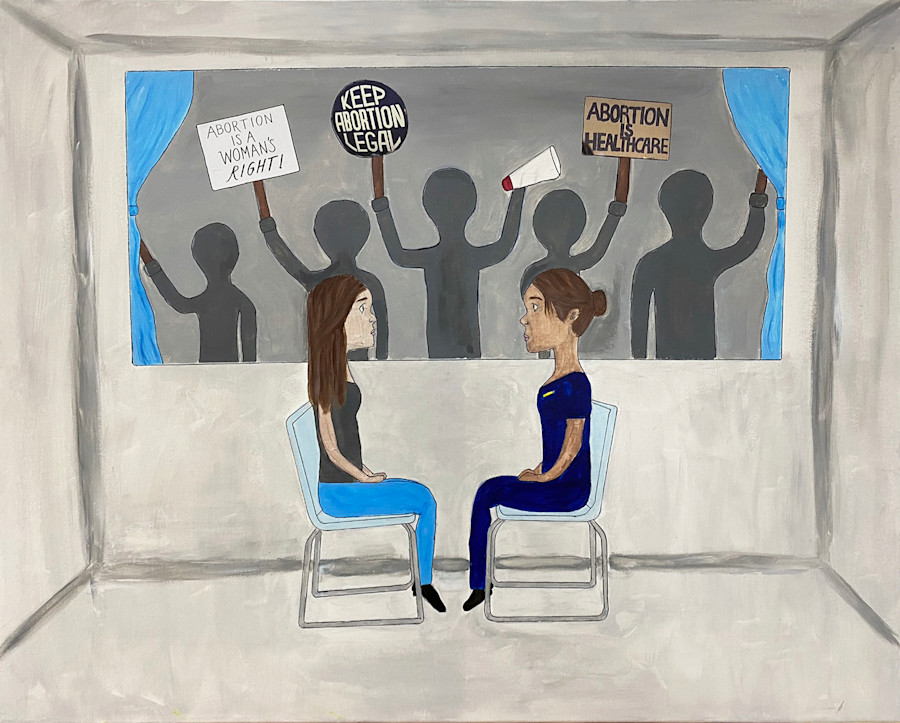
Through historical research, literature, and various artistic mediums, students explore the arts as a means to process and express complex emotions and experiences. By engaging with challenging themes like racism, abortion, and cancer, students are encouraged to consider aspects of health they may not have previously explored.
The exhibition not only highlights the diverse talents of nursing students but also stimulates reflection and important conversations regarding the privileges and challenges of contemporary nursing. It offers an opportunity for students and the public to learn from each other and gain a deeper understanding of the complexities of healthcare.
The module ‘The Art and History of Nursing’ fosters interdisciplinary collaboration, involving practice partners, charity organizations, primary care professionals, patient volunteers and university departments such as chaplaincy, classics and ancient history, medical humanities, and medical history.
Please note that the exhibition contains some challenging themes such as cancer, racism and abortion, which some might find distressing.
Watch a short film by BBC Spotlight to find out more about the purpose of this exhibition and see some of the contributors talk about their works.
Film: © BBC Spotlight
Theme: Women's reproductive health
The Unspoken Phase
Lucy O’Brien
Acrylic and mixed media on canvas
Menopause is a natural part of ageing as a woman. In society there are still many taboos and misconceptions when it comes to menopause, often causing women to suffer silently. The intention of this piece is to encourage women to talk about their own experiences with menopause but to also be made aware of the different types of support that is available to them.
This piece includes the lunar cycle surrounding the reproductive system, represented by various types of Hormone Replacement Therapy (HRT). It is often thought that menstrual cycle aligns with the lunar cycle at certain times. Many women experience a menstrual cycle throughout a large part of their life and this piece intends to show the ending of this cycle when a woman begins the menopause and enters a new regime of HRT.
I created this piece as a painting with mixed media as I wanted a visual representation of the cycle to be seen. I felt it was important to include HRT in this piece as it shows a small variety of the options available, and the medication leaflet shows the side effects and risks that come with HRT. I wanted to show that HRT can be lifechanging for some women, but it comes with a risk to your health.
As nurses we have a duty to care for our patients at any stage of life including menopause. This piece has allowed me to better educate myself with knowledge I will take forward into practice. I hope that this piece will inspire others to learn and talk more about menopause as this a natural part of life not something to be hidden or ignored.
The Encroaching Womb
Rachel Scoble
Watercolour and acrylic paint on paper
Endometriosis is a chronic condition where tissue similar to the lining of the uterus grows outside of the uterus, causing chronic pelvic pain, heavy bleeding during periods, and sometimes infertility. Affecting roughly 10% of women and girls at reproductive age, recent research has established endometriosis as a systemic condition that has widespread effects on the body, not sorely the pelvis. It is important to raise awareness of endometriosis as symptoms remain misunderstood and stigma remains prevalent.
To visually encapsulate the systemic nature of the condition, a painting was created using watercolour and acrylic paints.
Two women and a girl are featured with the blue figure holding a uterus to represent the common belief that endometriosis affects only the pelvic area. Each figure has a broken-up outline of a uterus, symbolising the less recognised areas of the body that endometriosis impacts including the lungs, brain, and lower back. It also symbolises the ancient medical belief, the ‘wandering womb’ which suggested that a displaced uterus moving around the body caused medical issues in women.
The word ‘encroaching’ in the title represents how endometriosis can take over the body as well as invade someone’s mental health and other aspects of life. Creating this piece deepened my understanding of the lived experiences of endometriosis, its complexities, and the importance of compassionate care including fully listening to concerns from patients. Artwork is a method for patients to express pain and helps nurses reflect on their practice, therefore improving patient care.
Poetry is/Endometriosis is
PhD student Laura Warner in collaboration with members of Endometriosis South Coast
Poetry and pouring acrylics on canvas
Endometriosis is a chronic systemic condition that affects 10% of women and others who menstruate. Symptoms of the condition include heavy menstrual bleeding, pelvic pain, fatigue, digestive issues, painful intercourse, and fertility issues. Life with endometriosis is often made more challenging by the difficulties those with the condition face getting others in their lives – loved ones, healthcare practitioners, teachers – to understand their needs and provide support.
Poetry is/Endometriosis is represents the thoughts, feelings, and experiences of a group of women living with endometriosis who are supported by charity Endometriosis South Coast. During a series of poetry workshops led by University of Exeter researcher and poet Laura Warner, group members read and discussed poetry and wrote their own pieces collaboratively and in groups. Starting with the prompt “poetry is,” their first collaborative writing activity revealed the multiple, complex, sometimes contradictory feelings they each had about poetry.
Upon discussion, the group realised that many of their responses to the prompt were also true of their feelings towards endometriosis. They arranged the lines of poetry as a Venn diagram to depict their feelings about the relationship between poetry and endometriosis. The piece exhibited is one group member’s interpretation of this Venn diagram as explored through the selection and merging of colour. The artist chose greens and blues to represent poetry and reds and purples for endometriosis. Where the two meet, there is light and shade to denote the difficult themes that our endometriosis poetry explores and the spaces that creative expression opens for more nuanced understanding.
Where do you belong?
Callum Leatherbarrow
Poem
Focusing on the theme of women’s health, parting slightly and looking in depth at how transgender men and non-binary patients are included as a subsection but excluded from national screening programmes such as cervical screening. This is an at-risk minority group of patients who need to be able to access healthcare. The more society develops and understands differences between people, the more we need to review our current practices and develop new terminology and programmes to meet everyone’s needs. Poetry is a powerful medium to explore this topic and the complexity of it, it allows you to give a voice to an area which has been routinely neglected. The creative nature of poetry allows you to really make the reader experience something that they may not have every thought about, and it leaves the reader with questions to ask and answer.
This poem is an exploration of a smear test and the emotions that come with for a transgender man. It is the thought process both patient and the nurse, highlighting the importance of understanding and proper preparation and information. The training and lack of information is clear when considering the circumstances around accessing healthcare for the transgender and nonbinary community, grouped together with traditional women’s health care, going against the identity of patients and creating an emphasis on the differences which cause so much distress to our patients. This poem highlights the question of where transgender healthcare belongs when talking about national screening programmes for biological health concerns.
The Cost of Contraception
Charlotte Smith
Sculpture
This piece was created to shine a light on the issue of pain management in women’s health, specifically in Intrauterine Device (IUD) insertion, medical dismissal, and gaslighting. The lack of research into pain management in IUD insertion reflects a historical pattern of women’s pain being downplayed. From the absence of pain management in early gynaecological procedures, such as J. Marion Sims’ experiments on enslaved black women, to the ongoing neglect of conditions such as endometriosis, women’s pain has long been deprioritised in healthcare.
Sculpture was chosen for its physical presence and impact. Barbed wire replaces the copper coil on the IUD to signify pain, coiling around the head represents the twists and turns of pain and resilience. It also reflects the psychological toll- building tension from anxiety and distress during insertion. Articles relating to the issue and testimonies of those who have undergone the procedure placed on the head give voice to those previously silenced, connecting individual experiences to a wider systemic issue.
The creation of this piece was a journey of discovery, revealing how pain in women’s healthcare has been historically overlooked. Research into the topic inspired artistic choices, strengthening the sculpture’s role as both a representation of suffering and a call for change. The lack of facial features and expression symbolises the emotional and psychological toll of being dismissed, with many internalising the feeling of being invisible. The piece urges a re-evaluation of pain management in women’s health, demanding that medical professionals listen, because silence should never be the standard response to suffering.
Wellbeing
Canvas of Breath
Megan Gooding
Collaborative calligraphy
Breath is a vital, automatic function for life controlled by the brain stem although conscious input can manipulate its rate and depth. Focused breath stimulates areas in the brain responsible for emotional regulation (1-3). Regular mindful based practice has consistently demonstrated physical changes such as increased density of grey matter and increased cortical thickness in the brain associated with improved cognitive function; it’s also shown to reduced amygdala size and activation linked to reduced stress activation (4).
Mindfulness based activities including breathwork have been an effective non-pharmaceutical intervention to support the treatment of acute and chronic pain, clinical depression, PTSD, Anxiety, Sleep difficulties, Smoking cessation, Hypertension, Type 2 diabetes, HIV patients receiving antiretroviral therapy and more recently, in reducing burnout and medical errors (5-7).
Hitsuzendō is a form of Japanese Zen calligraphy that uses controlled breathing and mindfulness techniques of awareness, attention, acceptance, and reperceiving to find the state of ‘no mind’ and a tool towards gaining enlightenment.
Ensō is a circle symbol drawn in Hitsuzendō that can represent everything and nothing or perfection in the imperfect. The circle can be complete or open depending on the meaning given to the character at the time of drawing and is personal to the artist. Ensō is created by deliberately drawing the circle in unison with the body’s natural inhalation and exhalation.
Patients and healthcare providers are exposed to frequent periods of stress. Participating in Hitsuzendo could be a tool to promote wellbeing. This is a collaborative piece of art that invites you to take a mindful moment to focus on your breath and complete your own Ensō. By the end of the exhibition this piece hopes to show a canvas full of breath.
- Yackle K, Schwarz LA, Kam K, Sorokin JM, Huguenard JR, Feldman JL, et al. Breathing control center neurons that promote arousal in mice. Science. 2017;355(6332):1411-5.
- Herrero JL, Khuvis S, Yeagle E, Cerf M, Mehta AD. Breathing above the brain stem: volitional control and attentional modulation in humans. J Neurophysiol. 2018;119(1):145-59.
- Balban MY, Neri E, Kogon MM, Weed L, Nouriani B, Jo B, et al. Brief structured respiration practices enhance mood and reduce physiological arousal. Cell Rep Med. 2023;4(1):100895.
- Desbordes G, Negi LT, Pace TW, Wallace BA, Raison CL, Schwartz EL. Effects of mindful-attention and compassion meditation training on amygdala response to emotional stimuli in an ordinary, non-meditative state. Front Hum Neurosci. 2012;6:292.
- Williams H, Simmons LA, Tanabe P. Mindfulness-Based Stress Reduction in Advanced Nursing Practice: A Nonpharmacologic Approach to Health Promotion, Chronic Disease Management, and Symptom Control. J Holist Nurs. 2015;33(3):247-59.
- Brown RP, Gerbarg PL. Sudarshan Kriya Yogic breathing in the treatment of stress, anxiety, and depression. Part II--clinical applications and guidelines. J Altern Complement Med. 2005;11(4):711-7.
- Brown RP, Gerbarg PL. Yoga breathing, meditation, and longevity. Ann N Y Acad Sci. 2009;1172:54-62.
REST
Stage 3 adult and dual pathway students
Poetic collage
During a wellbeing session for stage 3 nursing students, we discussed the notion of rest and using the examples set by neonatal palliative care nursing leaders in the South West, students thought about what rest means to them. They were encouraged to reflect this poetically and visually using collage in small groups.
Warming Sadness
Kitten Baxter
Poem
Prior to starting this project, a poem was initially chosen, naively thinking that it would be less exposing than creating a physical art piece, such as a painting. However, as the poem developed and my innermost thoughts and feelings were being explored and reflected onto the page, it became clear that a poem is much more than just written words. Each word carefully chosen, alongside the rhythm, structure, and poetic devices to encapsulate a feeling.
The poem first describes the monotony of driving home in the dark after a long day of placement. However, it then unravels how this journey can truly feel, especially after an upsetting or traumatic day. Through researching wellbeing among healthcare professionals, it was discovered that this feeling is not exclusive to me, amplifying the importance of sharing this piece to resonate with other professionals and act as a communicative device to those outside of healthcare. I have also researched the history surrounding this topic, including nursing during the war, and the impact that their limited emotional relief has had on contemporary nursing.
This poem is structured using 4-line stanzas and a basic rhyming scheme, as this felt most comfortable as someone who is generally unfamiliar with poetry. However, this structure created a sense of uniformity, despite the distressing topic, perhaps reflecting the way healthcare professionals carry themselves through a difficult shift. In the background, is a photo taken of the dual-carriageway where these reflective moments usually occurred, deepening the meaning of this piece for me.
Patient and Public Involvement
Scars
Indiana Bird, aged 14, Patient and Public Involvement Member
Song
For almost my entire life I have struggled with accepting how I look, partly because of my stoma and scars from previous surgeries, but it was mostly because of social media. I was exposed to the idea of the ‘Perfect Body’, and as a young teenager with a physical disability, that had a huge impact on how I saw myself. Every single insecurity I had immediately amplified, and over the years it just got worse and worse. I eventually started writing music, and it became a coping mechanism for me. It allowed me to come to terms with how I was feeling and put my thoughts into words.
This song for me was a healing journey and helped me learn to love myself again . I really hope it helps other teenagers and even adults learn to love who they are, and know they aren’t alone with how they feel.
Click on the video below to listen to 'Scars' by Indiana Bird, and to see the accompanying artwork created by members of the University of Exeter Public and Patient Involvement and Engagement (PPIE) Advisory Group.
A Life Worth Living
Fergus MacDonald, Patient and Public Involvement Member
Collage
My name is Fergus and I am 26 years old. I love Heavy Metal, History, Drama, Going to The Theatre, My Family, My Personal Assistants, Going on Adventures, Kayaking, Work Experience at Adventure Okehampton, Climbing, Archery, Working at Wesley’s Café in Budleigh Salterton and I Love My Life.
Before I was born my Mum was told my life wouldn’t be worth living because I have Down Syndrome. How wrong were they?! I might need support to do things but I am most definitely living my best life.
Palliative and End of Life Care
Roots of Care
Lydia Stiles
Mixed medium painting
In 1843, death was seen as a failure by the medical system, curative treatments were the focus. Thirty years later the first hospice establishment was formed.
My artwork depicts a felled tree with a green shoot growing from the stump. The piece uses pencil, pen, watercolours, and paper flowers.
The shoot is sturdy, with four leaves sprouting off. This symbolises renewal, growth, and resilience for nurses and patients alike – values deeply connected in hospice care. The shoot is healthy – light and water having reached it. Much like hospice patients feel stronger when supported by nurses.
A tree stump represents the end-of-life phase. This contrasts to the leaves signifying that even in loss, different opportunities for social connection, inner peace, and personal growth remain. The shoot conveys the idea of finding life and meaning in unexpected places. This is similar to how hospice care illuminates a person’s final days, offering comfort and opportunities to form positive memories amid grief.
Paper flowers surround the drawing, encompassing the theme of natural cycles within life. Although leaves fall off of trees during autumn, they regrow during the spring in rebirth alongside fresh flowers. I used these creative techniques to represent how beneficial creative therapy can be. It takes away the pressure to find words to express feelings, and ease feelings of isolation and loneliness. This is a feeling that hospice nurses often witness and experience when dealing with death. I decided to accentuate the colour and playfulness of the piece with mixed medium to reinforce the hope and life that hospice care aims to appreciate. Hospice care is often associated with the colour green for this reason.
The Last Fight: Dignity vs Disease
Charlotte Turner
Watercolour painting
This watercolour painting symbolises the emotional and physical toll of glioblastoma, an aggressive and devastating brain cancer, at the end of life. Watercolour was deliberately chosen for its fluidity and softness, evoking the fragility of the brain, the fleeting nature of life and the essence of human dignity, especially as it is tested by terminal illness.
At the centre, a human brain is overtaken by a grotesque, monster-like tumour – its invasive growth symbolising the uncontrollable nature of the disease and how it strips patients of autonomy and identity, a reality many families tragically face. Surrounding the brain are prescriptions that represent more than medication; they embody the intangible aspects of holistic care-love, warmth, and touch- essential yet often overlooked in maintaining dignity at end-of-life. The tension between medical intervention and person-centred care prompts critical discussions on palliative care, assisted dying, and research investment.
Historically, neurological cancers were misinterpreted as weakness or mental illness, leaving many patients neglected. Thanks to the pioneering work of Dame Cicely Saunders, who established the first modern hospice, there has been a shift toward integrating compassionate care with clinical research and pain management.
This painting serves as a call to action – to invest in research, support clinical trials, and advance care so future patients and their families do not endure the same suffering. Inspired by witnessing my grandfather’s struggle with glioblastoma, this piece reflects the difficult question many families face about dignity in dying.
Hospice
Stage 3 student nurses (adult pathway) and Hospiscare staff
Collage
Stage three adult pathway students were invited to Hospiscare to learn about the care and facilities available for patients and their families at end of life.
We discussed what hospice means to those that are supported by it and how the provision offered can improve quality of life and symptom management.
This piece is a collaborative piece between staff and students as they discussed end of life care and their experiences.
Historic Nursing Leaders
The shining light on hygiene
Louise Gilpin
Colouring pencil on white foam
This piece explores Florence Nightingale’s innovative role promoting hand washing during the Crimean War, whilst linking its significance to modern day healthcare practices. Nightingale’s advocacy for hand washing was ground breaking. She understood, the simple yet profound act of hand washing with soap and water could save lives and reduce disease, ultimately reducing mortality rates of injured soldiers from 42% to 2%.
The centre of the piece depicts hands under a tap with water flowing, symbolising purity and the vital role hand hygiene plays in saving lives. It connects past and present day, emphasising the continued importance of hygiene in preventing disease. The inclusion of nightingale’s lamp symbolises her shining a light on hygiene.
The medium used for this visual representation was colouring pencil on foam board, which allowed for a more engaging and impactful picture. The soft white surface, paired with the use of pastel hues were chosen to achieve precise control and blending of colours, whilst evoking a sense of purity and freshness.
Nightingales’ promotion of hand hygiene in the mid 1800s laid the foundations for practice. Today ‘5 moments of hand hygiene’ continues to direct infection control procedures, with hands still being washed with soap and water. This piece captures Nightingale’s legacy and continued relevance to contemporary nursing practice. Reflecting on Nightingale’s work has reshaped the artists approach to patient care and reinforced their commitment to uphold the highest standards of hygiene and infection control in their practice.
University of Exeter
Room 153, Queen's Building
The Queen's Drive
Exeter EX4 4QH